


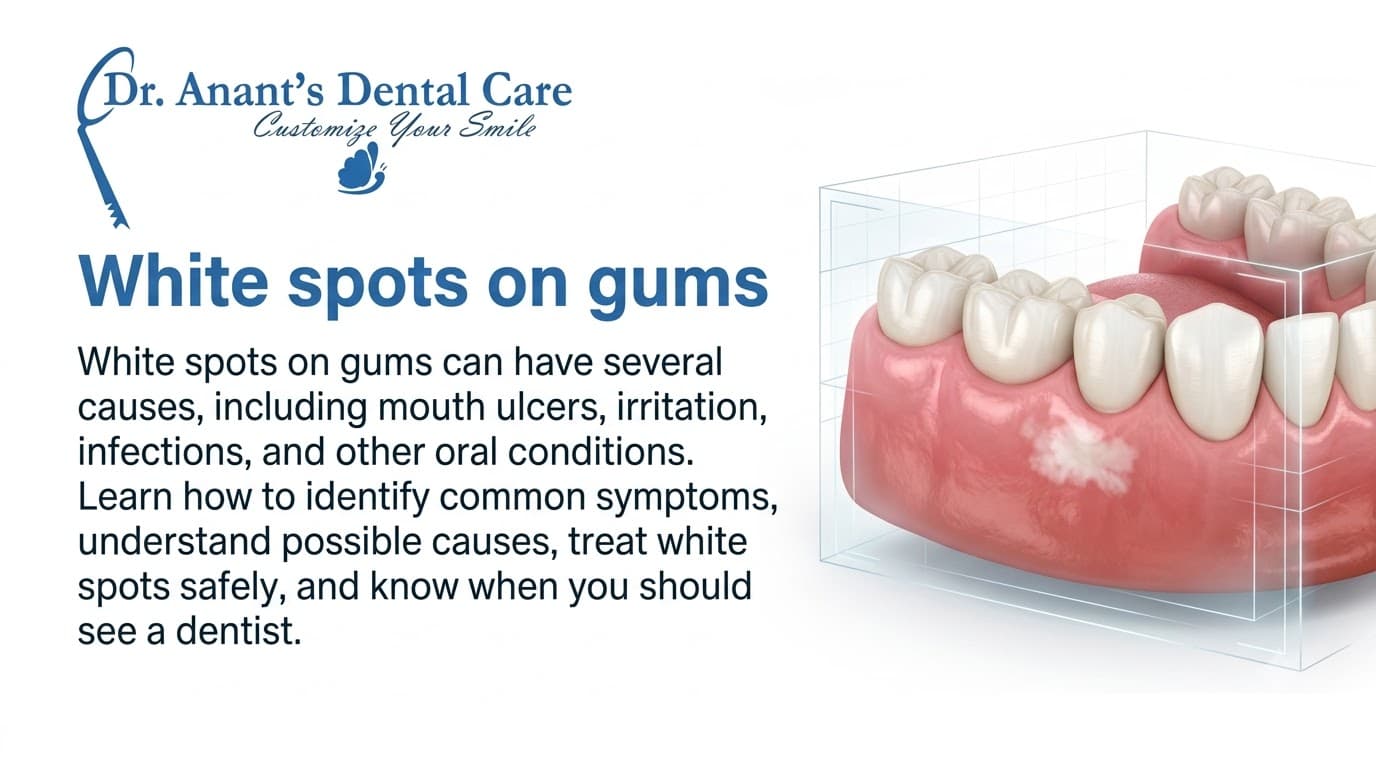
Do you notice white spots on your gums when you brush your teeth or look inside your mouth? These spots may appear as small marks, patches or sores and can sometimes cause pain, tenderness or irritation. White spots can also appear on a baby’s gums or inside their mouth, sometimes due to conditions such as oral thrush or minor irritation. While some white spots may be temporary and harmless, others can be linked to mouth ulcers, irritation, infections or other oral conditions.
If you notice white spots on gums, you may wonder why they appeared, whether they are normal and how you can get rid of them. Understanding their possible causes and appearance can help you know when simple oral care may be enough and when you should consult your dentist for proper evaluation and treatment.
Key Takeaways
- Common Causes: White spots may result from mouth ulcers, gum irritation, oral infections or other oral conditions.
- Appearance Matters: White spots can appear as small marks, flat patches, raised areas or sores with redness.
- Painful Spots: Painful white spots may be linked to ulcers, irritation, inflammation or certain oral infections.
- Treatment Depends on Cause: The right treatment depends on the underlying cause, so avoid removing or scraping spots yourself.
- Gentle Oral Care: Use a soft-bristled toothbrush, maintain good oral hygiene, stay hydrated and avoid foods that irritate your gums.
- When to See a Dentist: Consult your dentist if spots persist, grow, become painful, repeatedly return or develop with swelling or bleeding.
What do white spots on my gums mean?
White spots on your gums are areas that look lighter or different from the surrounding gum tissue. They may appear as small white spots, patches, sores or a thin coating on the gums. In some cases, they can develop due to minor irritation, mouth ulcers, infections or other oral conditions.
The appearance of the spot, whether it hurts, how long it stays and whether it changes over time can provide useful clues about its possible cause. Some spots may disappear on their own, while persistent or recurring white patches may need a dental examination.
If you notice new spots on gums, avoid scraping or irritating the area and continue gentle oral hygiene. A dentist can examine your gums and identify the underlying cause before recommending appropriate treatment.
What Causes White Spots on Gums?
White spots on your gums can develop for several reasons and the appearance of the spot may vary depending on its cause. Common white patches on gums causes include minor irritation, mouth ulcers, infections and certain oral conditions. Understanding the possible cause can help you know when you may need dental care.
Canker Sores or Mouth Ulcers
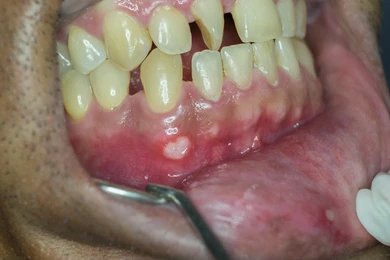
A canker sore may appear as a small white or yellow spot with a reddish border. These sores can make your gums painful, particularly when you eat, brush or touch the affected area.
Oral Thrush
Oral thrush is a fungal infection that can cause creamy white patches inside your mouth. The patches may sometimes involve your gums and can be accompanied by soreness or a burning sensation.
Gum Irritation or Injury
Brushing your teeth too hard, using a hard-bristled toothbrush, wearing dentures or braces or experiencing minor trauma can irritate your gums and lead to temporary white areas.
Leukoplakia
Leukoplakia can cause persistent white patches in the mouth that do not easily wipe away. If you notice a white patch that does not improve or keeps returning, you should have it checked by a dentist.
Other Oral Conditions
Conditions such as oral lichen planus and other oral lesions can also cause white areas in your mouth. Different conditions can look similar, your dentist can examine the area and determine the likely cause.
What Do White Spots on Gums Look Like?
White spots on your gums can appear differently depending on their cause. You may notice small spots, larger patches, pain or irritation.
- Small spots: Tiny white or pale marks may appear on one area of your gums or in several places.
- White patches: Larger, flat white areas can develop on your gums and may cover a noticeable portion of the tissue.
- Raised spots: Some white spots may look slightly raised or swollen and can feel different when touched with your tongue.
- Red border: Certain sores may have a reddish border around the white centre, particularly when irritation or inflammation is present.
- Pain or tenderness: White spots may become painful or tender, especially while eating, brushing or touching the affected area.
- Removable coating: Some white areas may gently wipe away, while others remain attached to your gum tissue.
- Persistent patches: Some white patches may remain for a longer period without disappearing and should be checked by a dentist.
- Other symptoms: You may also experience swelling, burning, irritation, sensitivity or discomfort around the affected gum area.
Are those white spots on gums painful?
A painful white spot on gums may develop because of irritation, mouth ulcers, infection, or inflammation. The pain can range from mild tenderness to discomfort while eating, drinking, or brushing your teeth.
- Mouth ulcers: Small white or yellow sores can develop with a red border and may feel painful or tender.
- Gum irritation: Brushing too hard, sharp foods, braces or dentures can irritate your gums and cause painful white areas.
- Oral infections: Certain infections may cause white patches along with soreness, burning, swelling or other mouth discomfort.
- Inflammation: Irritated or inflamed gum tissue may become sensitive and develop temporary white areas.
- Dental treatment: Your gums may feel sore or irritated after certain dental procedures, causing temporary changes in appearance.
- When to seek care: See your dentist if painful white spots persist, worsen, repeatedly return or occur with swelling or bleeding.
Are White Spots on Gums Normal?
White spots on your gums are not always a sign of a serious problem. Temporary spots can develop due to minor irritation, mouth ulcers or other common oral conditions and may disappear as the area heals. However, whether they are normal depends on their appearance, cause and how long they remain.
- Temporary spots: Minor irritation or mouth ulcers may improve naturally within a short period.
- Painful spots: Tender white areas may occur with ulcers, irritation or inflammation.
- Persistent patches: White patches that do not disappear or keep returning should be examined by a dentist.
- Changes in appearance: Increasing size, swelling, bleeding or unusual texture may require professional evaluation.
- Unexplained spots: If you are unsure why a white spot has appeared, a dental examination can help identify the cause.
How to Treat White Spots on Gums?
The treatment for white spots on your gums depends on what is causing them. A dentist can examine the affected area, review your symptoms and recommend treatment based on the underlying condition. Avoid trying to scrape, cut or remove a white spot yourself, as this can further irritate your gums.
Treatment for Mouth Ulcers
If a white spot is caused by a mouth ulcer, keeping your mouth clean and avoiding spicy, acidic or very hot foods may reduce irritation. Your dentist may recommend a suitable topical treatment if needed.
Treatment for Oral Thrush
When oral thrush is responsible for white patches, an antifungal medicine may be recommended after professional evaluation. Maintaining good oral hygiene and cleaning dental appliances properly can also support recovery.
Treatment for Gum Irritation
If brushing too hard, braces, dentures or another source of irritation is responsible, removing or reducing the trigger can help your gums heal. Use a soft-bristled toothbrush and brush gently.
Treatment for Persistent White Patches
White patches that remain for a long time, repeatedly return or cannot be explained should be examined by a dentist. Further examination may be needed to identify the cause and decide whether additional treatment is appropriate.
Professional Dental Care
There is no single treatment for every type of white spot on gums. Your dentist will consider the spot’s appearance, symptoms, duration and possible cause before recommending the right approach. Seeking timely dental advice can help you manage the condition safely and prevent unnecessary irritation.
How to Get Rid of White Spots on Gums ?
Getting rid of white spots on your gums depends on their underlying cause. Some temporary spots may improve as your gums heal, while persistent patches may require professional dental care.
- Maintain gentle oral hygiene: Brush twice daily with a soft-bristled toothbrush and clean between your teeth without irritating the affected area.
- Avoid irritants: Reduce spicy, acidic, very hot or hard foods if they increase discomfort around the white spot.
- Do not scrape the spot: Trying to remove a white patch yourself can irritate your gums and may delay healing.
- Stay hydrated: Drinking enough water can help keep your mouth comfortable and support normal oral health.
- Avoid tobacco: Smoking and tobacco products can irritate oral tissues and may contribute to persistent changes inside your mouth.
- Follow professional treatment: If an infection, ulcer or other oral condition is responsible, follow your dentist’s recommended treatment.
- Get persistent spots checked: See your dentist if a white spot does not improve, becomes painful, grows or repeatedly returns.
How to Prevent White Spots on Gums ?
Getting rid of white spots on your gums depends on their underlying cause. A painless white spot on gums may improve on its own when caused by minor irritation, while persistent patches may require professional dental care.
- Maintain gentle oral hygiene: Brush twice daily with a soft-bristled toothbrush and clean between your teeth without irritating the affected area.
- Avoid irritants: Reduce spicy, acidic, very hot or hard foods if they increase discomfort around the white spot.
- Do not scrape the spot: Trying to remove a white patch yourself can irritate your gums and may delay healing.
- Stay hydrated: Drinking enough water can help keep your mouth comfortable and support normal oral health.
- Avoid tobacco: Smoking and tobacco products can irritate oral tissues and may contribute to persistent changes inside your mouth.
- Follow professional treatment: If an infection, ulcer or other oral condition is responsible, follow your dentist’s recommended treatment.
- Get persistent spots checked: See your dentist if a white spot does not improve, becomes painful, grows or repeatedly returns.
Conclusion
White spots on gums can develop for different reasons, from minor irritation and mouth ulcers to infections and other oral conditions. In many cases, temporary spots may improve with gentle oral care and by avoiding things that irritate your gums. However, you should not ignore a white patch that remains for a long time, becomes painful, grows or keeps coming back.
Avoid scraping or removing the spot yourself, as this may cause further irritation. Maintaining good oral hygiene, using a soft-bristled toothbrush, staying hydrated and avoiding tobacco can help support healthy gums. If you are unsure why you have white spots on your gums or the area is not improving, a dental examination can help identify the cause.
With the right diagnosis and treatment, you can manage the underlying problem and maintain healthier gums and better overall oral health.
-
Why do I have white spots on my gums?
It may develop due to mouth ulcers, irritation, oral infections, dental appliances or other oral conditions. A dentist can examine your gums and identify the underlying cause.
-
What causes white spots on gums?
Common causes include canker sores, oral thrush, gum irritation, minor injuries, braces, dentures and certain oral conditions. Identifying the cause helps determine whether you need specific treatment or dental evaluation.
-
Why white spots on gums hurt?
A white spot on gums that hurts may occur because of mouth ulcers, gum irritation, inflammation, or oral infections. You may notice increased discomfort while eating, brushing your teeth, or touching the affected area.
-
What do small white spots on gums mean?
Small white spots can result from mouth ulcers, irritation, infections or other oral conditions. Their appearance, location, duration and accompanying symptoms can provide useful clues about their possible cause.
-
Can white spots on gums go away on their own?
Some white spots caused by minor irritation or mouth ulcers may disappear as your gums heal. However, persistent, recurring or worsening spots should be examined by your dentist.
-
Can brushing cause white spots on gums?
Brushing too hard or using a hard-bristled toothbrush can irritate your gums and contribute to temporary white areas. Use a soft-bristled toothbrush and brush gently to protect your gums.
-
What are White Patches on Gums?
White patches on gums are lighter areas that may appear as spots, sores or coatings. They can develop due to irritation, mouth ulcers, infections or other oral conditions and may sometimes require dental evaluation.
-
Can White Spots on Baby Gums Be Caused by Thrush?
White spots on a baby’s gums can sometimes be caused by oral thrush, a fungal infection. Thrush may also cause creamy white patches inside the baby’s mouth and cheeks.
